The Center for Great Plains Studies is pleased to announce a lecture by the 4th Annual Great Plains Distinguished Book Prize winner. The Great Plains Distinguished Book Prize was created to emphasize the interdisciplinary importance of the Great Plains in today's publishing and educational market. Only first edition, full-length, nonfiction books published in 2008 were evaluated for the award.
September 8 • 3:30 p.m.
Great Plains Art Museum, 1155 Q Street
Reception begins at 3:00 p.m.
Great Plains: America's Lingering Wild
Photographer Michael Forsberg's newest book: Great Plains - America's Lingering Wild is an extension of several years of dedicated work trying to put a face to the native wildife, landscapes and conservation challenges in the heart of the North American continent. In this photo driven presentation, Mike will offer a look into what it took to pull the book together, share some stories from the field, and what he learned along the way. Ends with a multi-media piece taking the audience on a journey through the lingering wild of the Great Plains.
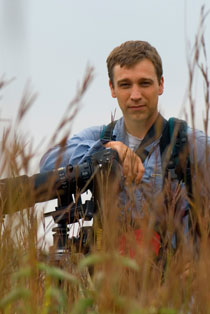
Michael Forsberg
Conservation Photographer
Lincoln, Nebraska
Photo of Michael Forsberg © by Joel Sartore
This lecture is part of the Paul A. Olson Seminars in Great Plains Studies series.