Lab Directors
John Hibbing and Kevin Smith
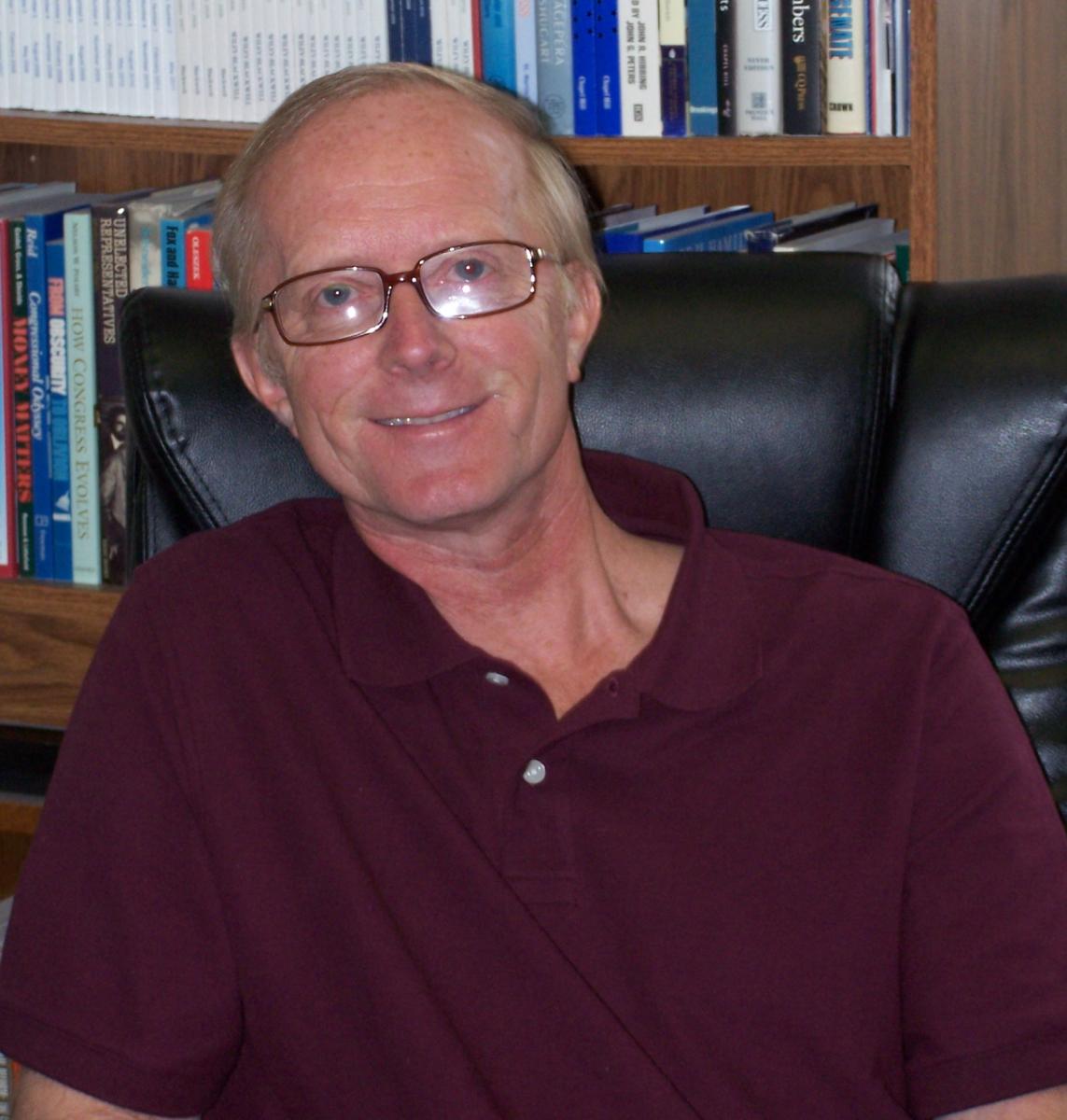
John R. Hibbing
Foundation Regents University Professor of Political Science
Ph.D, University of Iowa, 1980
Fields: Biology and Politics, Political Psychology, Public Opinion, American Politics, Legislative Politics.
For nearly 20 years, John Hibbing studied Congress, congressional careers, congressional elections, comparative legislatures, and public opinion toward Congress. About a decade ago, he and John Alford (Rice University) began investigating the role of biological factors in explaining political variation. They were soon joined by Kevin Smith.
Currently, they are engaged in projects involving the effects of cortisol levels on voter turnout, the effects of Androstenone detection on political attitudes, physiological variations as correlates of political ideology and involvement, variation across the political spectrum in cognitive tasks such as the flanker task, frustration task, and emotion discrimination task, gaze cuing, eyetracking technology, physiological responses to aversive stimuli, twin studies in the United States, Denmark, and Australia, cross-national physiology, brain imaging (both EEG and fMRI), molecular genetics, and economic games.
He previously edited the Legislative Studies Quarterly, served as Chair of the American Political Science Association's Legislative Studies Section, co-authored Congress as Public Enemy and Stealth Democracy (with Elizabeth Theiss-Morse), received the Fenno Prize, and served as a NATO Fellow in Science, a Senior Fulbright Fellow, Distinguished Visiting Fellow at the Sage Center for the Study of the Mind, and a Velux Senior Resarch Fellow at Sydansk University in Denmark.

Kevin B. Smith
Professor of Political Science
Ph.D, University of Wisconsin-Milwaukee, 1994
Fields: Public policy, Public Administration, American Politics, Biology and Politics
Kevin Smith spent more than a decade studying public policy, public administration and bureaucratic behavior. About ten years ago he became interested in the biological basis of attitudes and behavior, especially in how the theories and methods of cognitive psychology, behavioral genetics, and psychophysiology might be employed to better understand political traits. For most of that time he has closely collaborated with John Hibbing (see above) and John Alford (Rice University) on a range of research projects that investigate biological correlates of political, social and economic behavior and attitudes.
The latter include serving as Co-PI on project to create the first-ever data set specifically designed to investigate the heritability of political, social and economic traits (available on this website), co-founding the UNL Political Physiology Lab, and being a Co-PI on the Human Social Dynamics (HSD) project, an NSF-funded project that is the first attempt to investigate a comprehensive set of biological markers of political behavior (genes, physiology, endocrinology, brain imaging) on a representative sample of adult citizens.
He has authored or co-authored nine books as well as dozens of journal articles and book chapters. He has served as co-editor of State Politics & Policy Quarterly, was a long-time director of the UNL Political Science Graduate Program, chairs UNL's Systems Biology of Social Behavior initiative, and is a recent recipient of the College of Arts and Science's Outstanding Research and Creative Achievement award.
Graduate Students
Several current graduate students have focused a significant portion of their energies on research associated with the Political Physiology Lab.

|
Stephen SchneiderPh.D Student Fields: American Politics, Political Psychology, Biology and Politics I am interested in numerous things. Where do I start? Currently, I am interested in political attitudes, beliefs, and ideology, and how these relate to biology. Previously, and on any given day, I am curious about group dynamics and gender. If you would like to see me salivate like one of Pavlov’s dogs, mention how any of my research interests are related to endocrinology. |

|
Clarisse WarrenPh.D Student Fields: American Politics, Political Psychology, Biology and Politics |
Samamtha LaufPh.D Student |

|
Kyle HullPh.D Student Fields: Comparative Politics, International Relations, Political Psychology, Disability Rights |

|
Ernest Dupree IIIPh.D Student Fields: Political Psychology, American Government, Biopolitics |
|
Alison O'ToolePh.D Student Fields: Public Policy, International Relations/Security, Immigration |
Samamtha WeinerPh.D Student |