July 15, 2026
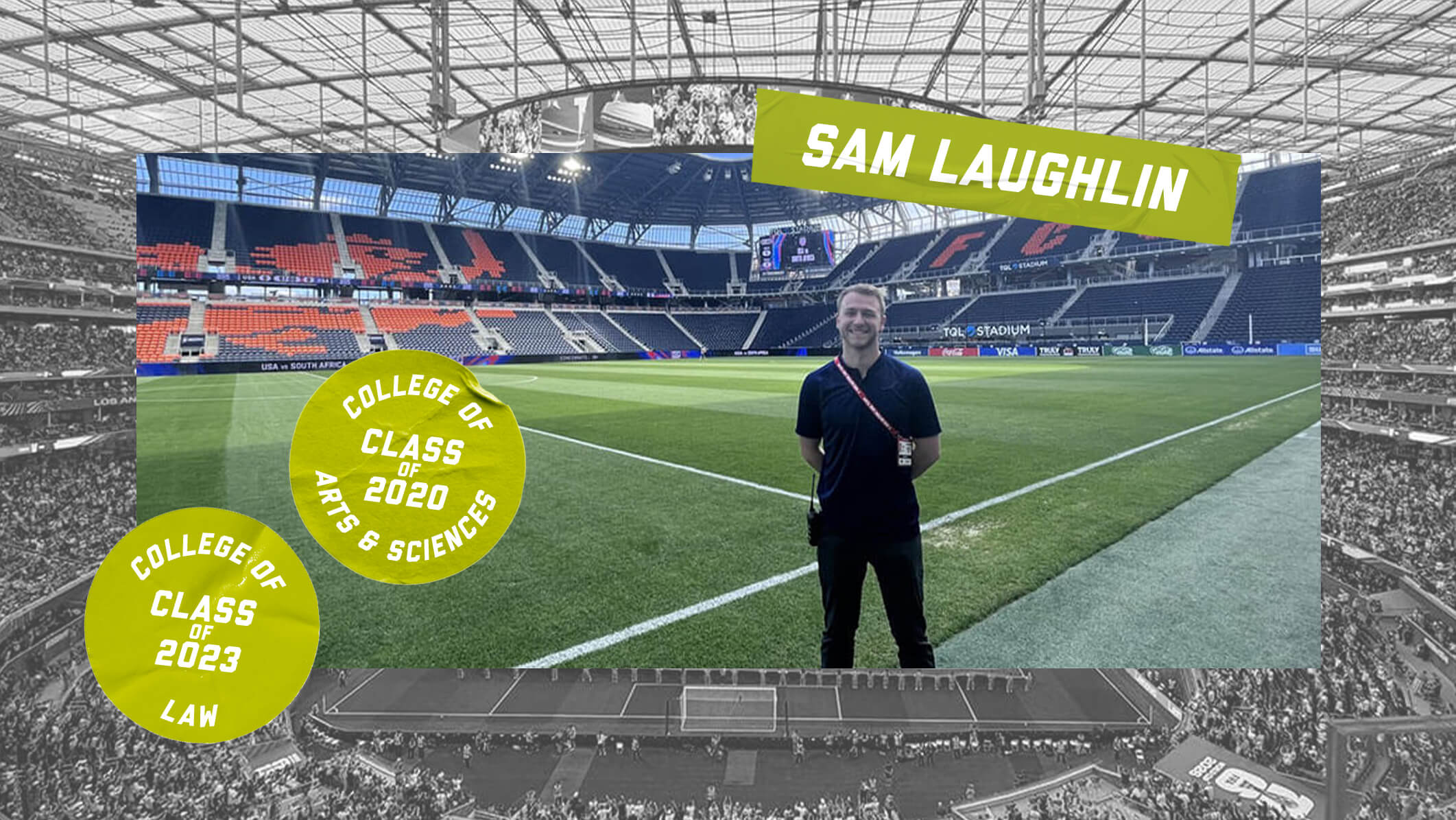
For Sam Laughlin, a College of Arts and Sciences ('20) and College of Law ('23) graduate, a career in sports was always the goal. Working with the U.S. Soccer Federation allows Sam to contribute to the intangible benefits of athletics, like community building, growing the game of soccer and making dreams come true.
You are the manager of campaigns & special projects at the U.S. Soccer Federation. Can you explain what this role entails?
My role at U.S. Soccer sits within our Advancement Department, which is our fundraising arm. My role really has three core areas of responsibility: campaign management, Advancement communications and special projects.
Campaign management is focused on our Behind the Dream campaign, a $250 million initiative to help shape the future of soccer in America. It's the first comprehensive fundraising campaign in U.S. Soccer's history and is helping us invest in our National Teams, our new Arthur M. Blank U.S. Soccer National Training Center and legacy initiatives that grow the game for generations to come.
My communications work focuses on how we tell those stories to our supporters and create a culture of philanthropy around the idea that everyone can play a role in shaping the future of soccer in this country.
Finally, special projects involve creating new ways for supporters to engage with our mission, whether that's through our Brick Program, locker naming opportunities or other initiatives that allow people to leave their mark on the future of the game.
The U.S. Soccer Federation aims to use soccer “as a force for good.” How do you hope to inspire the next generation of athletes and impact sports communities with your work?
We're in such an exciting time for soccer in America because of this once-in-a-generation opportunity. Hosting the FIFA World CupTM this summer is incredible, but the bigger question is what we build because of it and what lasts long after the final whistle. Philanthropy can play an essential role in providing resources, education and opportunities across our country because of the way it can ensure immediate funding for long term results and can deliver social impact in a way other sources of revenue cannot.
Whether someone is passionate about seeing our National Teams succeed on the world stage, supporting disability soccer or growing the sport in their local community, U.S. Soccer can help to execute that vision.
Beyond Advancement, we have so many people at the Federation who are dedicated to being In Service to Soccer. One example of this work that I like to point to is our Pathways Strategy that aims to make soccer easier to navigate, more accessible and more enjoyable for everyone. By reducing barriers, opening doors for more people to play and improving the experiences of everyone involved in the game, we can ensure that the next generation experiences soccer not just as a sport, but as a force for good.

Is there a campaign or special project that you have led and are especially proud of? If so, please share.
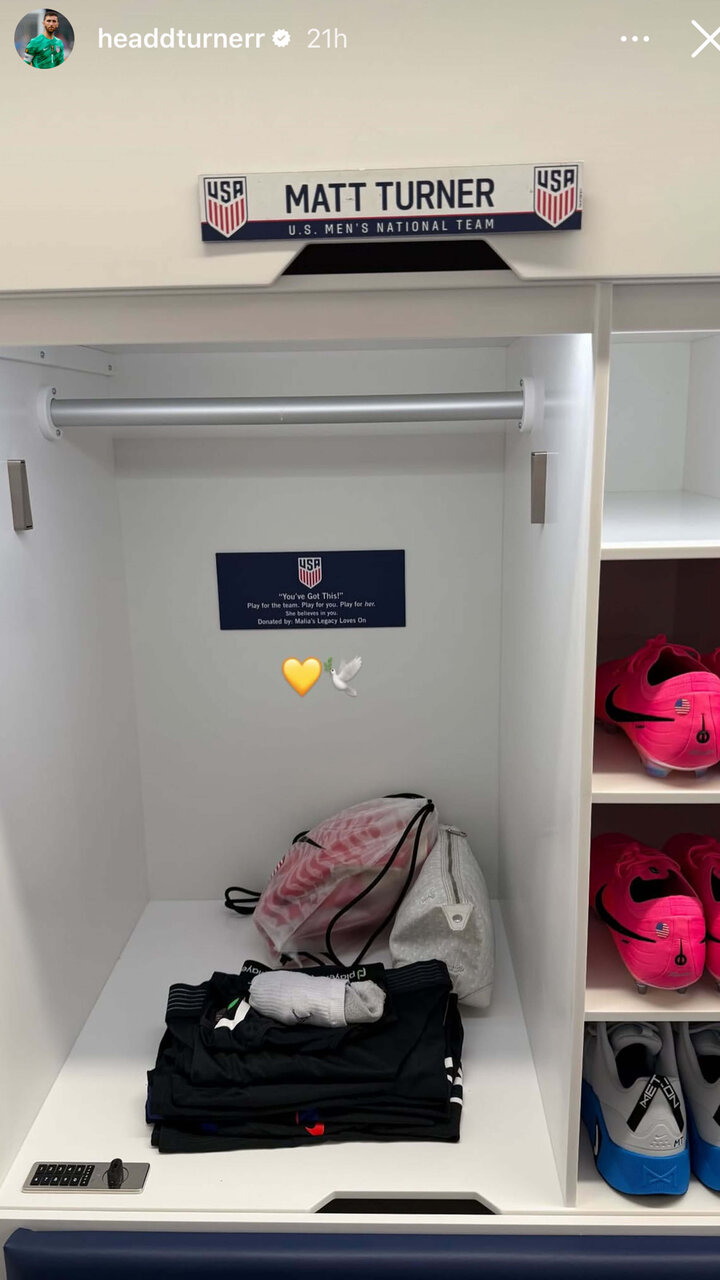
Personally, I've been really proud of our initiative that invited donors to put their name on a locker at our new Arthur M. Blank U.S. Soccer National Training Center. This was a special project for me because I had the privilege of working with a family, the Jusczyks, who grew close with USMNT goalkeeper, Matt Turner, while their late daughter was battling cancer. They were able to install a custom message in the locker that Matt used during the team's warm up camp for this summer and I know this meant a lot to the family and to Matt. Working with the Jusczyk family has been the most rewarding project I've ever worked on and I am so grateful that my work introduced me to them and their story. Experiences like that remind me that sports are ultimately about people and relationships.
What inspired your work in sports?
Sports have always been at the center of my life and my early professional experiences affirmed that this was the industry I wanted to spend my career in. I remember when I was an undergrad student serving as a student-athlete tutor and I really grew to appreciate the student-athlete experience. I worked with people from vastly different backgrounds and skill sets, but all of whom shared a passion for excelling in whatever it was they were participating in. I've always viewed my role, whether in compliance or fundraising, as serving the people who make sports possible: the athletes, coaches, officials, volunteers and supporters.
I also really appreciate that working in sports means working in competitive team environments where there's always a distinct goal to strive for and where there's a winner and a loser. But most of all, I love what sports can do away from the scoreboard. Sports build community, teach life lessons, create opportunities and bring people together in ways that few things can. That's something we've seen on full display during this summer's FIFA World CupTM, and it's one of the reasons I feel incredibly fortunate to work at U.S. Soccer.
You obtained your bachelor’s and law degrees from Nebraska. How did your educational experiences prepare you for a successful career?
I always loved school and learning, and after graduating from Nebraska, I've realized the value of being a lifelong learner. I had such a variety of experiences during my time in undergrad and law school, which taught me that one of the best ways to learn is to have an open mind and gain as many different experiences as possible. My educators at Nebraska always pushed me to think analytically and to challenge myself. Ultimately, the most important lesson I learned during my time at UNL is that growth occurs the most when you push yourself outside of your comfort zone — something I've absolutely found to be true in my professional career.
During your time at Nebraska, you worked with the Husker athletic department as a compliance intern and development assistant. You also hosted the Husker Talk Podcast and interned with the Lincoln United Soccer Club. How did the skills and connections at Nebraska empower you to go out and do big things in the sports world?
One of the most important things you can do as a young person is try new things and get out of your comfort zone and all of those experiences, in one way or another, are examples of exactly that. And each of those experiences were made possible by either a professor helping me to make connections or by my willingness to network — a skill that I very much learned during my time at UNL.
I have also found that the Nebraska network runs deep and runs across the world, especially in the sports industry. There are Nebraskans everywhere, and they always want to help other Nebraskans!
Was there anyone at Nebraska who had an impact on your academic or professional career?
There are so many people I could mention, but if I had to just highlight a few, I would say:
- Ann Tschetter for being such an incredible advisor and always encouraging me to follow the path that I am most passionate about.
- Laura McLeod for teaching me so many of the skills I use in fundraising today and for always having her door open to students.
- Kristen Blankley for guiding me through my internship in law school, being so kind to me and my wife and for continuing to be a mentor well after graduation.
- The Huskers Athletic Fund team for the trust they put in me, for showing me the ropes of the college athletics industry and for being great friends well after my time as an intern.
Do you have any advice for students who are looking to find their competitive edge in the industry and start a career in sports?
My biggest piece of advice is simple: network, network, network. The sports industry is incredibly relationship-driven, and many of the opportunities I've had in my career can be traced back to a conversation, a connection or someone willing to open a door for me. Don't be afraid to introduce yourself, ask thoughtful questions and stay in touch with people you meet along the way.
I also think it's important to understand that building a career in sports often requires sacrifices. Early in your career, you will work long hours, travel frequently or have to move to a place you've never been before. That is also why maintaining a positive attitude and healthy lifestyle outside of work is so important.
Finally, find your competitive edge because everyone brings something different to the table. For me, it was earning a law degree, which gave me a unique perspective and skill set that helped differentiate me in the sports industry. Figure out what makes you uniquely valuable and lean into it.