March 27, 2026
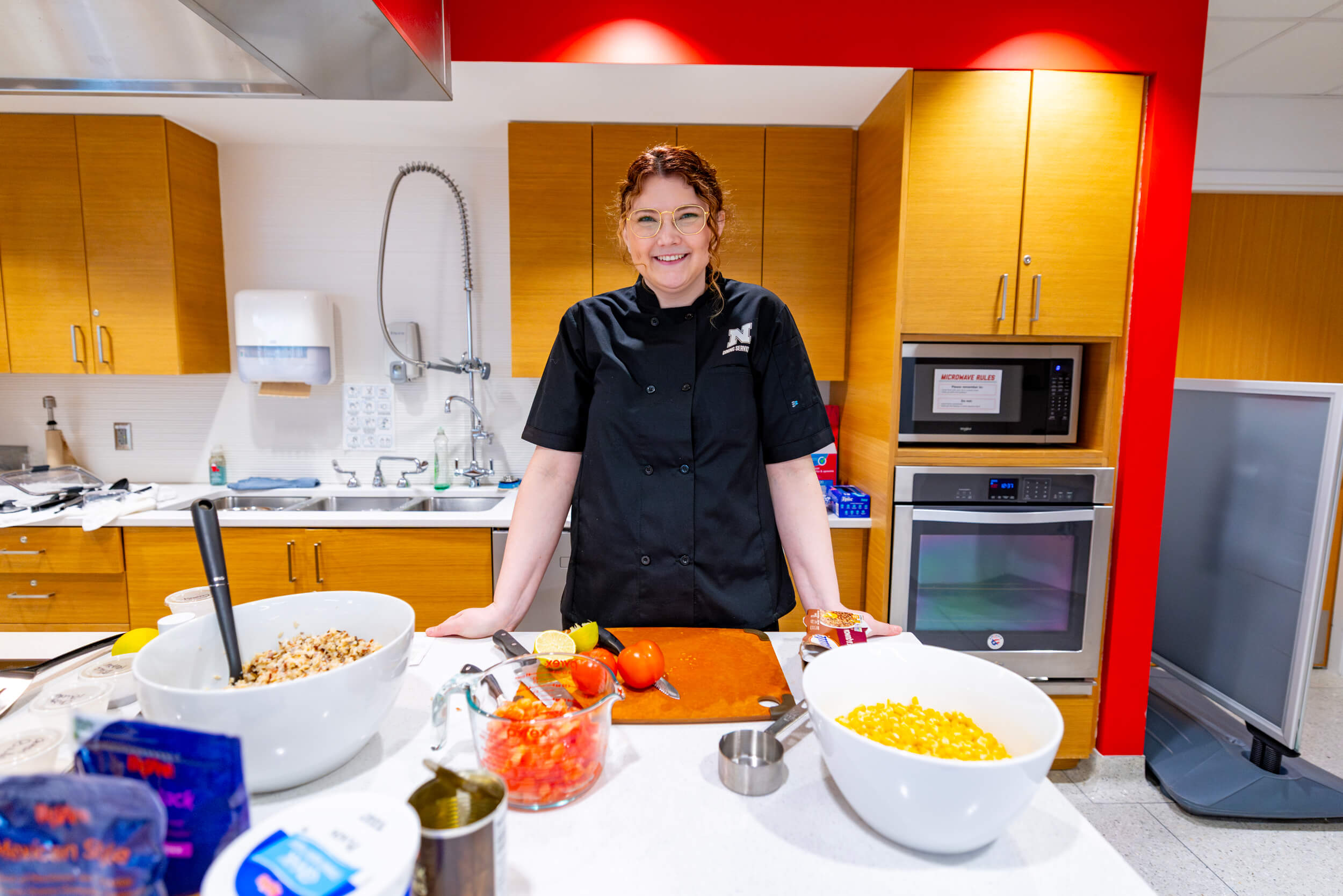
After earning her undergraduate degree in nutrition and dietetics and a master’s in community nutrition and health promotion from Nebraska, Ellyn McCarter knows how important it is for students to fuel their bodies. As a registered dietitian and nutrition manager, Ellyn works with dining staff to create nutritious, inclusive meals, meets with students one-on-one to discuss dietary needs and encourages the campus community to explore what an individualized, healthy, balanced lifestyle looks like.
You are a registered dietitian and the nutrition manager with University Dining Services here at Nebraska. Can you talk a bit about what this role entails?
My role is to help students receive all the information they need to eat safely and nutritiously on campus. This is especially important for students with special dietary needs like food allergies, intolerances, medically prescribed diets, vegan or vegetarianism or even religious diets.
I also work with our dining staff to ensure they have the training, tools and knowledge they need to prepare meals for students with dietary restrictions.
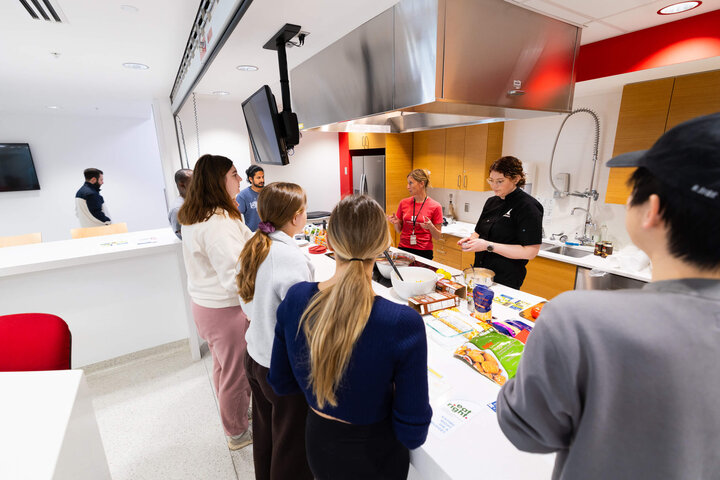
Part of your role consists of meeting with students one-on-one to discuss dietary needs for those with restrictions and those who are looking to build a balanced diet in college. What can students expect from these appointments?
Nutrition is very individualized. Everyone has their own likes, dislikes and schedules. Building plans and goals is always led by the student in these one-on-ones. Any student with a meal plan is welcome to meet with me to discuss options in the dining centers and ways to utilize their meal plan.
You speak passionately about debunking common misconceptions about nutrition and health. How do you encourage students to find a balance between fueling their body and not restricting themselves to societal standards?
“Healthy” does not mean following strict rules or cutting out foods entirely. We should try to build sustainable habits. Looking at food as “good” or “bad” instead of nourishment and energy adds to a person’s mental load. Instead, work up to having most of your meals include nutrient-dense foods. Sometimes that starts with the goal of having one serving of fruit every day.

How did you discover a passion for nutrition and what made you decide to pursue a career as a registered dietitian?
I discovered my passion for nutrition through my coursework as a student at a prior institution and then here at UNL. I love learning new things and every time I showed up to a nutrition class, I learned something new. This encouraged me to pursue a career in the field, and Nebraska offered me the opportunities and support I needed to succeed in the industry.
The faculty at Nebraska in the nutrition area is all knowledgeable and genuinely want their students to not only succeed, but to be great evidence-based practitioners. As a transfer student, I knew landing internship opportunities would be more difficult, but with the support of the faculty and staff at Nebraska, I was able to match into the dietetic internship program at UNL, where I became a registered dietitian and completed my master’s degree in 2023.
Can you describe the value of finding a nutritious, healthy and balanced diet while in college?
A diet high in whole grains, fruits, vegetables, low-fat dairy and a variety of protein sources is important in the short-term for academic performance and long-term health. Nutrition impacts focus, mood stability, energy and stress. To fuel for class, studying, jobs and RSOs you need nutrient-dense foods. Research consistently links poor diet to chronic conditions like heart disease, type 2 diabetes and certain cancers. Starting a nutritious, healthy and balanced diet in college sets you up for a lifetime of benefits.
What is your favorite comfort meal to make, and what was your go-to meal while a student at Nebraska?
My favorite comfort meal to make is a burrito bowl. You can change it up in so many ways. I make it different every time, but some essential ingredients are jalapenos, onion and beans. I recommend a base of brown rice to add some extra fiber.
During my time at Nebraska, my favorite restaurants were Runza and Imperial Palace. I have so many memories of hanging out with my friends and working on our homework together while eating in the Union.
What food tips or tricks would you give to students who lack the space and/or equipment for larger meals or are crunched for time?
Explore canned and frozen foods. They really cut down cooking time, and during certain times of the year, they may be less expensive than fresh. All you need is a microwave to heat them up. Frozen fruits and vegetables are picked at peak ripeness and, through freezing, they maintain their nutritional quality better than some fresh fruits and vegetables that may need to travel hundreds of miles to reach our grocery stores.
What is your favorite part of working as the nutrition manager on campus?
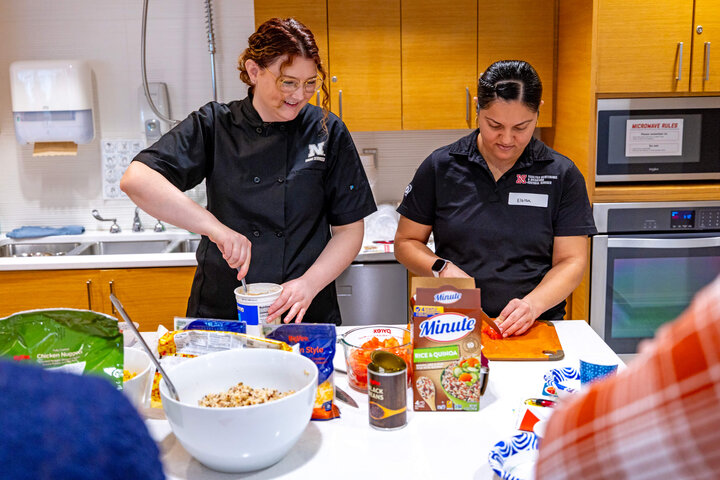
I love working with students, but the part that makes this a dream job is the support of my dining coworkers. The dining staff cares about the needs of our students, and they show that through the careful designing of their menus and their actions every day.
Is there anything people may not know, but would be interested to know about the behind-the-scenes work of University Dining Services and the work of the nutrition staff?
There is so much behind-the-scenes work that goes into preparing the 16,000 meals we prepare in a day. Processes such as recipe standardization, allergen management, food safety procedures and wasted food reduction happen before we even open the doors for service. It takes a lot of people, planning and coordination to execute three, or four if you include our late-night operations, meals a day.