In the Cornhusker State, philanthropy is often measured less in scale than in connection — people showing up for one another, building trust over time and strengthening the places they call home.
For Matt Sehnert, that approach was formed by his parents and sharpened at the University of Nebraska–Lincoln. It's an approach that’s yielded a lifetime of service to his community and a broader shift in civic culture he’s witnessed in McCook, where nonprofits, schools and community organizations have increasingly moved from operating independently to working together.
“I think what UNL did was really cultivate what I had learned at home growing up. It gave me practical experience in so many ways and helped me move on to the next part of my life.”
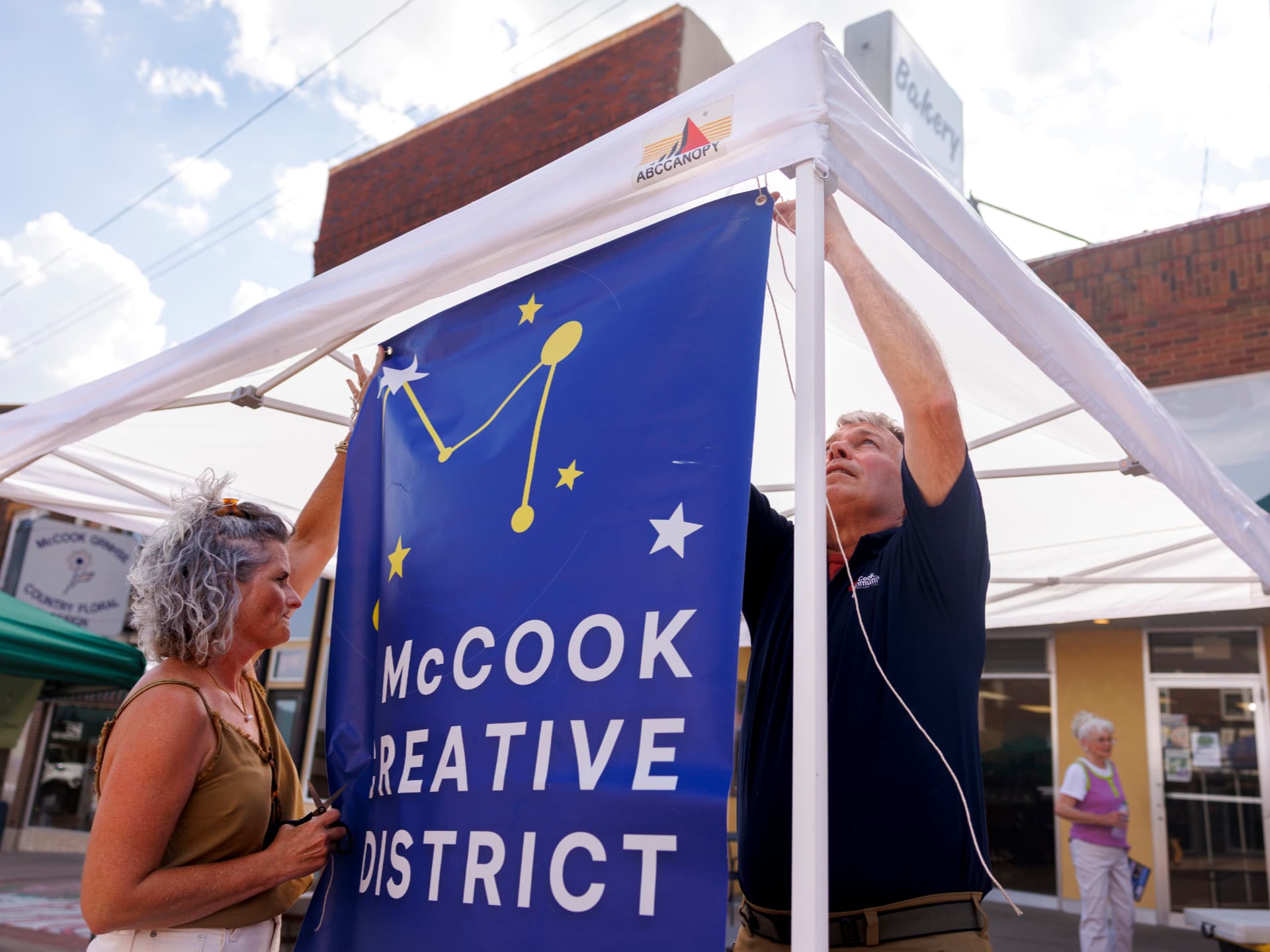
“I've learned that the most important thing is bringing people together to think about what would make southwest Nebraska better.” By bringing people together, Matt’s helped lead to the formation of a McCook Creative District that’s brought new art to town and fresh community programming, helped usher in a more collaborative approach to philanthropy and championed the shared values that matter to him and so many of his neighbors — values that he learned early from his parents around the dinner table. “My mom always said, ‘Why do doctors get to have colleagues, but businesspeople have to be competitors?’ From my parents, I think I've always had this foundation to think in terms of abundance rather than scarcity.”
It’s that “abundance mindset,” he says, that helped him realize that working together made it a lot easier for everyone to get what they needed. When he came to Nebraska, those early lessons were expanded. In the College of Business, coursework pushed him beyond theory into collaboration and problem-solving, where students worked through real-world challenges in teams.
“I had experiences that helped refine what my parents taught,” Matt says. “Through the business classes, you could make mistakes, go down different paths and learn that it takes people, not just a single person’s effort, to make things happen.”
His experiences in Alpha Tau Omega fraternity reinforced that understanding, where service and philanthropy were woven into student life. “There were structured philanthropic activities: service projects, fundraising events and different things where you were consistently doing something for other people. It wasn’t something you chose occasionally — it was just part of what you did.”
That repetition mattered. It turned service into something habitual — something embedded in daily life. His wife, Shelly Moravec Sehnert, was the one who encouraged him to see the ways it could be applied right outside his doorstep.
“She told me, ‘You don’t have to go halfway around the world to help somebody. You can do it right where you are.’”
Shelly knew a thing or two about using her Husker degrees to make everyday impacts. An ’87 grad from what is now the College of Education and Human Sciences and an ’08 graduate of the M.A. teaching program, Shelly’s career as a teacher — and her outlook on service — helped drive home how little differences can be made each and every day.
“My wife has been such a wonderful influence on my life in so many ways.”
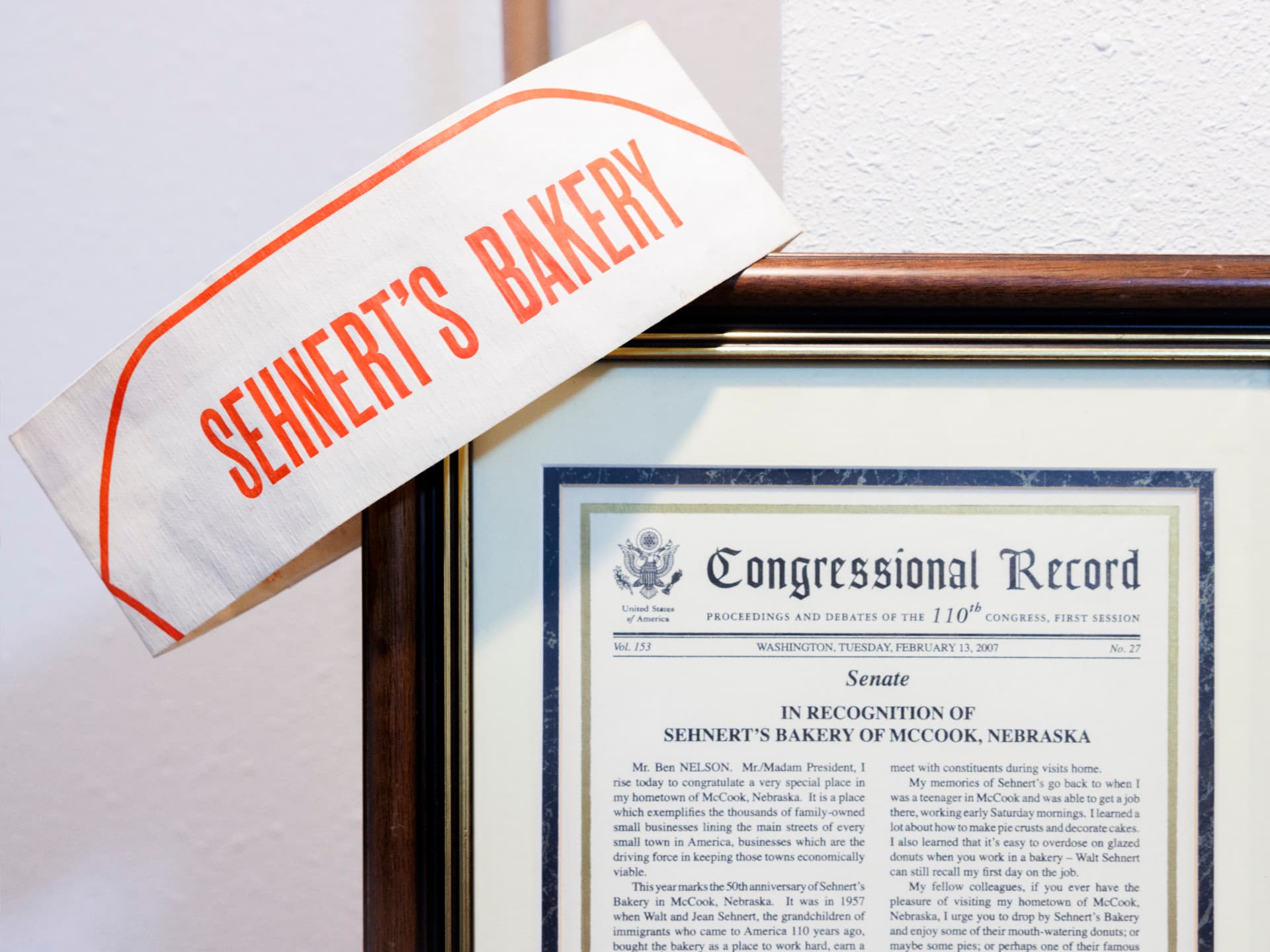
After spending time early in their careers living in Colorado, the couple moved back home to McCook to take over Sehnert’s Bakery. Their shared perspective translated into a community-minded business model for the couple. One result was making an effort to hire employees with disabilities.
“That’s probably one of the things I’m most proud of during our time running the bakery,” Matt says. “My wife always talked about how we’re blessed with so much, and so we always wanted to advocate for people with different experiences than our own.”
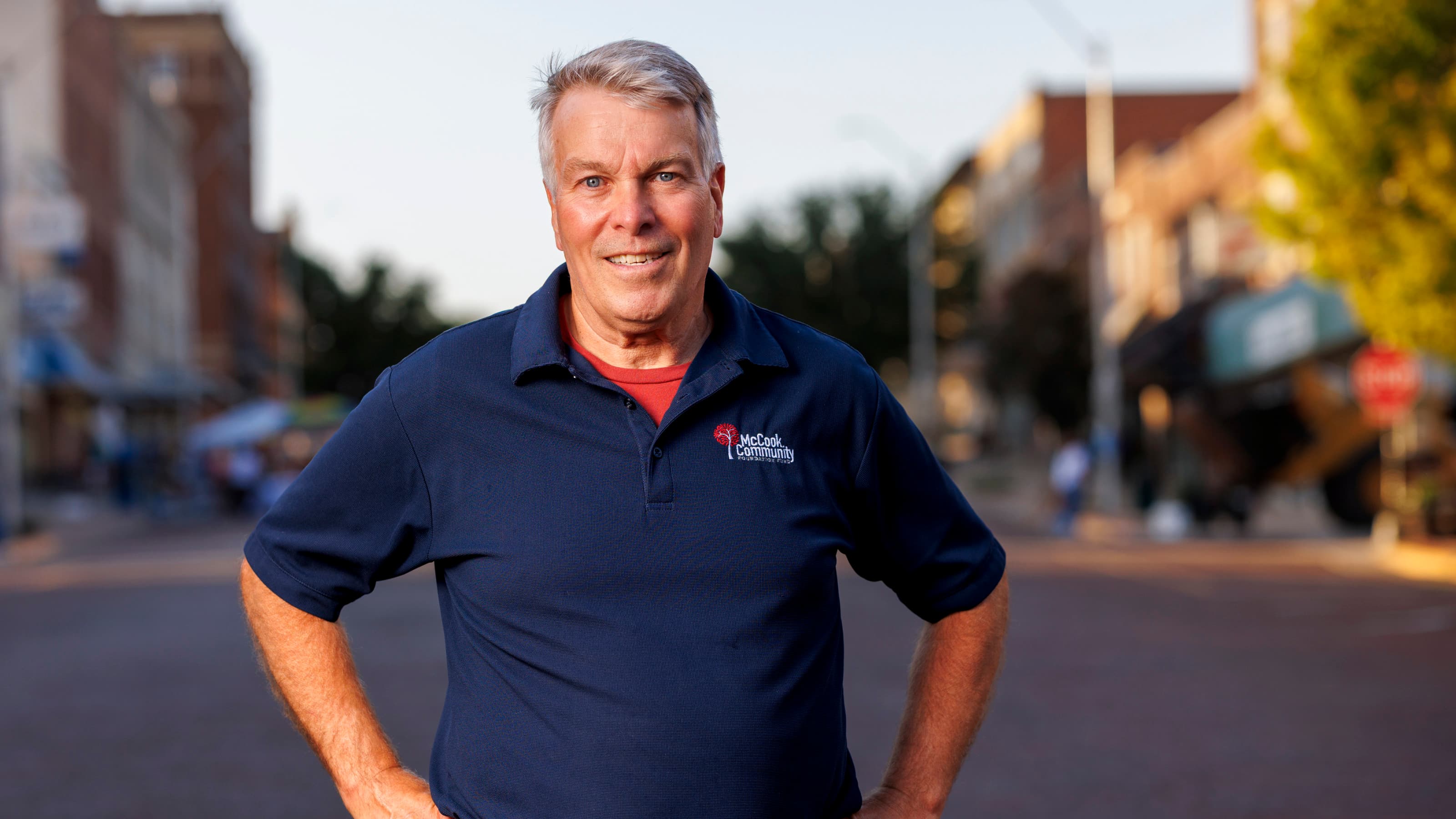
Matt has gone on to serve in leadership roles with the McCook Community Foundation Fund and remains active in local efforts focused on youth development, the arts and broader community investment.
The most important thing is bringing people together to think about what would make southwest Nebraska better.
“The most important thing is bringing people together to think about what would make southwest Nebraska better. It’s that abundance thinking, again, that my parents taught me. Working together is so much better than being in silos.”
Bringing people together has brought more creative solutions.
Those solutions have included working with the Community Foundation Fund on an initiative to encourage more estate donations to local philanthropies, organizing a communal a dinner for young people and their families to head off risky behaviors, coordinating an annual $1,000 award to numerous local philanthropies in memory of a former McCook community leader, and many, many other efforts big and small that have helped contribute to a more collaborative culture.
He traces this spirit back to those earlier experiences working in philanthropy with his fraternity, meeting people around the University of Nebraska–Lincoln’s campuses and getting a better sense of how he could best apply the values he gained growing up in McCook.
“We don’t think of each other around town as competitors around here — we’re collaborators and colleagues,” he says. “We celebrate each other’s successes.”
I think what UNL did was really cultivate what I had learned at home growing up. It gave me practical experience in so many ways and helped me move on to the next part of my life. Even today, I feel like I’m still evolving and learning.